
Basilica Cistern Opening Hours 2026 & Best Time to Visit
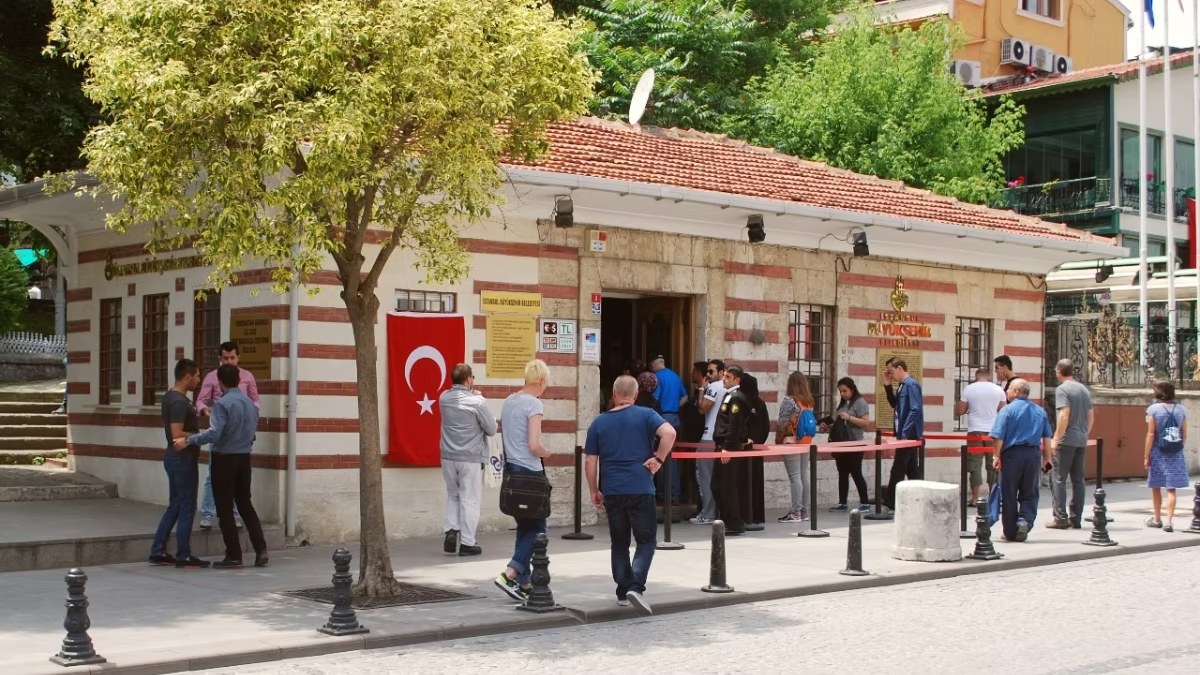
The Basilica Cistern is open every day of the year from 09:00 to 18:30, with a separate Night Shift session running from 19:30 to 22:00. The site closes briefly between 18:30 and 19:30 to reset for the evening programme. The best times to visit are just after opening (09:00–10:30) or in the late afternoon (16:30–18:30), when crowds thin out. Night Shift tickets are sold as a separate, more expensive entry and cannot be purchased online through the official box office — they’re sold at the door from 19:30, though authorised resellers also offer them in advance.
The Basilica Cistern keeps surprisingly generous hours for a 1,500-year-old Byzantine monument, but the real question isn’t when it’s open — it’s when you should actually go. The site sees over two million visitors a year, and midday queues in summer can stretch past an hour even with a pre-booked ticket. Timing your visit well is the difference between drifting quietly through a dimly lit underground palace and shuffling behind a coach tour from Germany.
This guide covers the current 2026 opening hours, the Night Shift schedule, the seasonal and daily patterns that shape crowd levels, and the specific time windows that photographers, families, and first-time visitors each tend to prefer. All hours were verified directly with the site’s operator (Kültür AŞ) in early 2026.
Basilica Cistern Opening Hours in 2026
The Basilica Cistern operates on a two-session model: a daytime museum visit and a separate evening experience called the Night Shift.
Daytime hours: 09:00 to 18:30, seven days a week, every day of the year. Last admission is typically 18:00 to give visitors 30 minutes inside before closure. The site does not close for public holidays or religious festivals — it stays open during Ramadan, Kurban Bayramı, New Year’s Day, and Republic Day.
Maintenance closure: 18:30 to 19:30. This one-hour gap exists to reset the site between sessions — lighting is reconfigured, staff change over, and the queue is cleared. You cannot enter during this window regardless of ticket type.
Night Shift hours: 19:30 to 22:00. This is a fundamentally different experience with its own atmosphere, own ticket, and own entry queue (more on this below).
The Basilica Cistern is run by Kültür AŞ, a cultural entity affiliated with the Istanbul Metropolitan Municipality. This is important because it means the Istanbul Museum Pass (which covers Hagia Sophia and Topkapı Palace) is not valid here — those are Ministry of Culture sites, while the cistern is municipal. If you’re planning your visit around a Museum Pass, the cistern is an additional ticket no matter what.
What about closures and restoration?
The cistern underwent a major restoration that concluded in 2022, reopening with new lighting, walkways, and art installations. Since then, there have been no extended closures. Occasional single-day closures for filming or private events do happen a few times a year, but these are announced with advance notice on the official website. If you’re visiting on a tight schedule, it’s worth a 10-second check a day or two before.
The Night Shift: What’s Different After 19:30
Night Shift (19:30–22:00) is a separate, more atmospheric evening session with dramatic lighting, occasional live music, and a 3,000 TL ticket (versus 1,950 TL for daytime). It cannot be pre-booked through the official box office — tickets are sold at the door from 19:30 — but authorised online platforms do offer advance Night Shift tickets.
The Night Shift isn’t just the cistern with the lights left on. It’s a deliberately curated experience: the standard museum lighting gives way to deeper reds and blues, sometimes accompanied by a live performance in the central column hall, and crowd numbers are capped much lower than daytime. You’ll often have entire column rows to yourself.
Entry is via a separate queue at the main gate. A regular daytime ticket does not work during Night Shift hours — it’s a different product entirely. Children under 7 enter free, as do licensed guides and — unusually — all disabled visitors and one companion.
For a full breakdown of the Night Shift experience, the pricing, and whether it’s worth the premium over a daytime visit, see our complete guide to Night Visits at the Basilica Cistern.
The Best Time to Visit: By Hour, Day, and Season
The best hour of the day
Crowd intensity inside the cistern follows a predictable curve. The space is small — about 140 metres by 70 metres — and even moderate visitor numbers feel dense because walkways are narrow.
09:00–10:30 (best for photography): The site has just opened, tour groups haven’t yet arrived from their morning Hagia Sophia stop, and natural daylight leaking from the entrance shaft catches the columns nicely for the first half hour. This is the window serious photographers pick.
10:30–15:00 (peak crowds, avoid): Coach tours, cruise ship day-trippers, and school groups converge on Sultanahmet between mid-morning and mid-afternoon. Queue times can hit 60–90 minutes in July and August. Even with a skip-the-line ticket, the interior walkways can feel gridlocked.
15:00–16:30 (still busy): Crowds thin slightly but remain heavy. Not recommended if you want space around the Medusa Heads.
16:30–18:30 (best for a quiet visit): Day-tour groups have moved on to dinner or returned to their hotels. The last 90 minutes before closure are consistently the calmest daytime window. Light inside stays constant — the lighting is artificial — so late afternoon offers the same visual experience as morning, just without the crowds.
19:30–22:00 (Night Shift): The quietest of all, but with the understanding that you’re paying for a different kind of visit rather than just a crowd-free one.
The best day of the week
Weekdays beat weekends by a significant margin. Saturday is the worst day of the week in most seasons, followed by Sunday. Tuesday and Wednesday tend to be the quietest. Fridays during the call to prayer (roughly 13:00 in spring and summer) see a brief dip as local visitors observe prayers, but this is a minor effect.
Cruise-ship schedules also matter if you’re visiting in the April–October cruise season. Istanbul’s main cruise terminal is at Galataport, a 20-minute walk from the cistern. On heavy cruise-arrival days (often Tuesdays and Wednesdays, ironically), daytime crowds spike regardless of weekday.
The best season
Istanbul’s shoulder seasons are the sweet spot for the cistern specifically because they combine mild surface weather with much lower visitor volume.
March to early May: Excellent. Spring weather up top, modest crowds underground, cool but not cold inside the cistern.
Late May to early September: Peak season. The cistern is actually one of the only attractions in Sultanahmet where high-summer heat is an advantage — interior temperatures sit around 16–18°C year-round, making it a welcome break from 35°C street temperatures. But queues are at their worst.
October and November: The second-best window of the year. Crowds drop sharply after mid-October.
December to February: The quietest months, especially weekday mornings. Interior conditions are identical to summer — it’s always damp and around 16°C — but you’ll share the space with a fraction of the visitors.
Hours for Specific Kinds of Visits
If you’re a photographer
Go at 09:00 sharp on a weekday in shoulder season. The first 20 minutes after opening are genuinely uncrowded, and the 2022 lighting scheme is tuned specifically for visual impact on camera. A light raincover for your lens helps — ceiling drip is constant.
If you’re visiting with young children
Avoid Night Shift (dark, narrow walkways, no strollers allowed near the Medusa Heads area). Early afternoon weekdays outside school holidays are easiest — shorter queues and less jostling. See our full guide to visiting with kids for age-specific advice.
If you have limited mobility
The wheelchair lift at the entrance can create waits of 20–30 minutes when busy. Visit in the 09:00–10:30 or 16:30–18:30 windows to avoid stacking behind other wheelchair users. Full details in our accessibility guide.
If you’re combining with Hagia Sophia and the Blue Mosque
The classic Sultanahmet morning goes: Hagia Sophia at opening → Basilica Cistern around 11:00 → Blue Mosque after 14:00 (it closes for prayer at lunch). This puts you inside the cistern during peak crowds. A better sequence: Basilica Cistern at opening → Hagia Sophia at 10:30 → Blue Mosque in the afternoon. Our article on combining nearby attractions breaks down several optimised itineraries.
How Long Do the Queues Actually Last?
With a standard walk-up ticket bought at the door:
- 09:00–10:00 weekday in winter: 5–10 minutes
- 11:00–14:00 weekend in July: 60–90 minutes, occasionally 2 hours
- Late afternoon in shoulder season: 15–25 minutes
With a fast-track ticket bought online, you bypass the ticket-purchase queue but still join the entry queue — which is typically 10–20 minutes even at peak times, rather than the full 60–90. The saving is meaningful but not unlimited.
Key Facts at a Glance
- Open 365 days a year
- Daytime hours: 09:00–18:30
- Evening Night Shift: 19:30–22:00
- Maintenance gap: 18:30–19:30 (closed)
- Best crowd-free windows: 09:00–10:30 and 16:30–18:30
- Best weekdays: Tuesday, Wednesday
- Busiest period: 11:00–15:00 in July and August
- Interior temperature: consistently 16–18°C year-round
- Istanbul Museum Pass: not valid
Frequently Asked Questions
What time does the Basilica Cistern open and close in 2026?
The Basilica Cistern is open every day from 09:00 to 18:30 for daytime visits, with a separate Night Shift session from 19:30 to 22:00. The site closes briefly between 18:30 and 19:30 to reset between sessions.
Is the Basilica Cistern open on Mondays and public holidays?
Yes. The site is open seven days a week, 365 days a year, including all Turkish public holidays and religious festivals such as Ramadan and Kurban Bayramı.
What is the best time of day to visit the Basilica Cistern?
The calmest windows are just after opening (09:00–10:30) and the final 90 minutes before closure (16:30–18:30). Avoid 11:00–15:00, when coach tours, school groups, and cruise-ship visitors create the longest queues and densest interior crowds.
When is the Basilica Cistern least crowded?
Weekday mornings in December, January, and February are the quietest of the year. Tuesday and Wednesday are typically the best weekdays in any season. Saturday is consistently the busiest.
Is the Istanbul Museum Pass valid at the Basilica Cistern?
No. The cistern is operated by Kültür AŞ (Istanbul Metropolitan Municipality), not the Ministry of Culture, so the Museum Pass Istanbul does not cover entry. You’ll need a separate ticket.
Can I visit the Basilica Cistern at night?
Yes. The Night Shift session runs from 19:30 to 22:00 daily and offers a more atmospheric experience with dramatic lighting and occasional live music. It requires a separate, more expensive ticket.
Does the Basilica Cistern close for restoration or maintenance?
There are no extended closures currently scheduled. The major 2020–2022 restoration is complete. Occasional single-day closures for filming or private events do happen a few times a year and are announced in advance on the official website.
How cold is it inside the Basilica Cistern?
Interior temperature sits between 16–18°C year-round. In summer this feels refreshingly cool; in winter a light jacket is comfortable. Humidity is close to 96% and water drops from the ceiling throughout the year.
