
Other Byzantine Cisterns in Istanbul: Beyond the Basilica Cistern
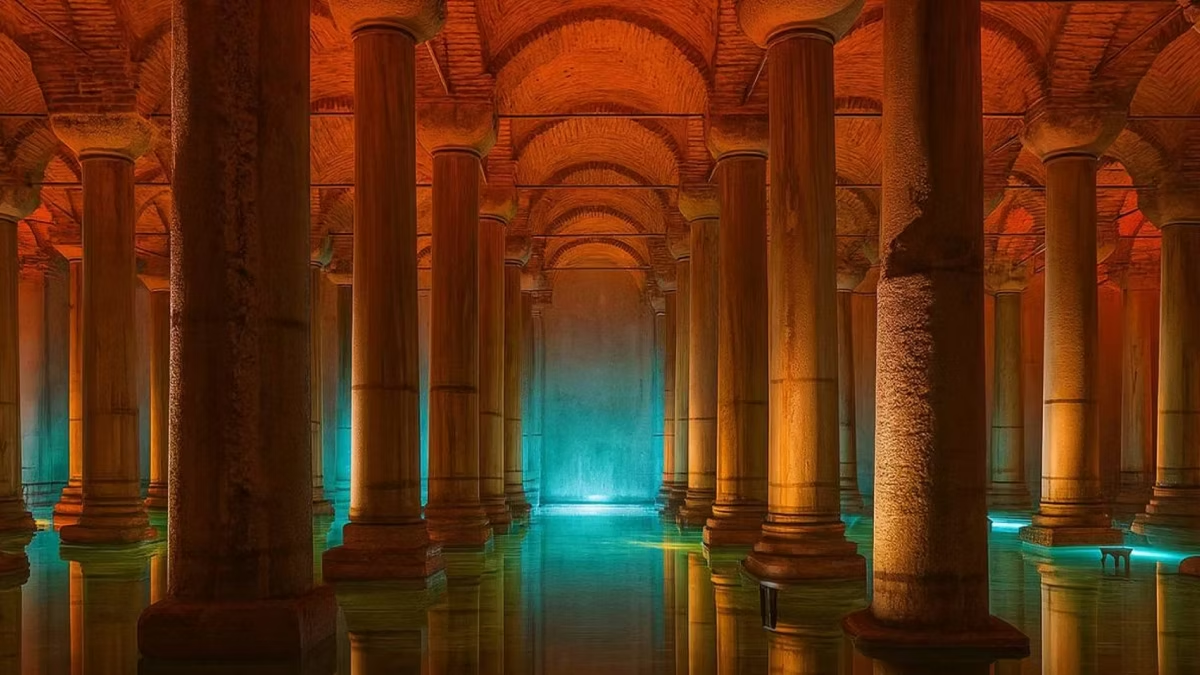
Beyond the famous Basilica Cistern, Istanbul has several other visitable Byzantine cisterns, each offering a different scale and character. The main ones are: (1) Şerefiye Cistern (Theodosius Cistern) — 5th-century, 42×25m, famous for its hourly 360° projection-mapping show; (2) Binbirdirek Cistern (Cistern of 1,001 Columns) — 4th-century, second-largest in Istanbul, with 224 marble columns; (3) the Basilica Cistern itself as the largest and most famous. Historically, Byzantine Constantinople had over 200 cisterns total, with only a handful currently open to visitors. The other open cisterns are less crowded, cheaper to visit, and offer quieter alternatives to the Basilica Cistern’s 2-million-annual-visitor volume. Best combined with a Basilica Cistern visit for cistern enthusiasts, or visited alone if the Basilica Cistern queues are too long.
If the Basilica Cistern is your first encounter with Byzantine underground architecture, you might assume it’s the only game in town. In fact, it’s one of over 200 documented cisterns that lay beneath Byzantine Constantinople, and two substantial alternatives are currently open to visitors in central Istanbul. For repeat visitors, cistern enthusiasts, or travellers looking for less-crowded alternatives, these lesser-known sites offer genuine Byzantine atmosphere without the Basilica Cistern’s queues or ticket prices.
This article covers the three visitable cisterns in central Istanbul, the broader network of Byzantine water infrastructure, and practical guidance for cistern-hopping across Sultanahmet. All information reflects 2026 operating conditions; prices in Turkish lira fluctuate and should be verified before visiting.
The Three Visitable Cisterns at a Glance
Central Istanbul has three main cisterns open to tourist visits, all in Sultanahmet:
- Basilica Cistern (Yerebatan Sarnıcı) — 6th century, 138×65m, the largest and most famous, ~€45 entry, visited by ~2 million annually
- Şerefiye Cistern (Theodosius Cistern) — 5th century, 42×25m, famous for 360° projection show, ~€17–18 entry, much quieter
- Binbirdirek Cistern (Cistern of 1,001 Columns) — 4th century, second-largest, 224 columns, separate operating hours and variable access
The three cisterns sit within roughly 1km of each other — you can easily walk between all three in under 20 minutes. For cistern enthusiasts, doing all three in a day creates a layered view of Byzantine water management that no single cistern can offer alone.
Şerefiye Cistern (Theodosius Cistern)
The Şerefiye Sarnıcı is the Basilica Cistern’s most important alternative — a 5th-century Byzantine reservoir that sat forgotten for centuries and reopened to the public in 2018 after careful restoration.
History
The Şerefiye Cistern was built between 428 and 443 AD under Emperor Theodosius II (reigned 408–450), predating the Basilica Cistern by nearly a century. Like the Basilica Cistern, it stored water supplied by the Valens Aqueduct from the Belgrade Forest.
The cistern served Byzantine Constantinople for centuries, gradually fell out of use, and was buried by layers of Ottoman and early-modern construction above it. It was rediscovered in 2010 when the old Eminönü Town Hall was demolished and preservation teams identified the Byzantine structure beneath. Restoration ran from 2010–2018, with the cistern formally opening to the public as a museum and cultural venue in 2018.
Physical characteristics
- Dimensions: approximately 42 × 25 metres (1,050 square metres total) — about one-tenth the Basilica Cistern’s area
- Columns: 32 marble columns, arranged in rows similar to the Basilica Cistern’s structure, each approximately 9 metres tall
- Capacity: substantially smaller than the Basilica Cistern — precise original capacity estimates vary
- Architectural style: typical Byzantine barrel vaults and cross vaults, consistent with 5th-century construction techniques
The smaller scale creates a more intimate atmosphere than the Basilica Cistern — you can absorb the whole space at once rather than walking extended perimeter loops. For visitors seeking Byzantine engineering in a digestible format, Şerefiye works well.
The 360-degree projection show
The Şerefiye Cistern’s main distinguishing feature is its 360-degree projection mapping show, Turkey’s first implementation of this technology at a heritage site. The show runs hourly during operating hours, using projectors mounted throughout the space to cast animated imagery across columns, walls, and ceiling simultaneously.
The show’s content varies by programming period but typically covers Byzantine history, Istanbul mythology, and the cistern’s specific story. The experience is immersive — for 10–15 minutes, the ancient space becomes a 360° visual environment.
Important note for 2026 visitors: Some recent visitor reports indicate the projection show has been paused or reduced in certain periods. Check with Şerefiye before your visit to confirm current programming. When the show isn’t running, the cistern is still visitable as a quiet archaeological space.
Practical information
- Address: Binbirdirek, Piyer Loti Cd. No:2/1, 34122 Fatih/İstanbul
- Opening hours: Typically 10:00–18:00 daily except Monday (closed); some sources indicate longer hours (09:00–19:00) — verify before visiting
- Entry fee: Approximately 900 TL (€17–18) for tourists; lower for Turkish nationals and discount-card holders
- Nearest tram stop: Çemberlitaş (T1 line), 250m walk
- Distance from Basilica Cistern: approximately 500 metres (6–7 minute walk)
- Audio guide: Available with ticket on most combo options
Who should visit Şerefiye
- Cistern enthusiasts doing multiple Byzantine reservoirs
- Visitors who found the Basilica Cistern too crowded and want a quieter alternative
- Travellers on a second Istanbul trip who’ve already done the Basilica Cistern
- Projection-mapping enthusiasts (when the show is running)
- Visitors on tight budgets — substantially cheaper than the Basilica Cistern
Who should skip Şerefiye
- First-time Istanbul visitors with limited time — the Basilica Cistern covers the essential cistern experience
- Visitors expecting the scale of the Basilica Cistern — Şerefiye is genuinely much smaller
- Visitors arriving on a Monday — closed
Is it worth it?
Opinions are mixed. Positive reviews praise the intimate atmosphere, the projection show (when running), and the relative absence of crowds. Negative reviews flag the smaller scale, the ticket price feeling high for the content, and the occasionally absent projection show. On balance, Şerefiye is a solid supplementary visit for cistern enthusiasts but not a must-see for first-timers.
Binbirdirek Cistern (Cistern of 1,001 Columns)
The Binbirdirek Sarnıcı (literally “Thousand and One Columns” in Turkish, though actually containing 224 columns) is the second-largest Byzantine cistern in Istanbul and one of the oldest.
History
Binbirdirek was constructed in the 4th century, making it older than both Şerefiye and the Basilica Cistern. It’s attributed to the Cistern of Philoxenos — named after a Roman senator who served under Constantine I. The cistern was originally part of a palace complex near the Hippodrome.
After serving Byzantine Constantinople for centuries, Binbirdirek fell out of use during the Ottoman period but survived structurally intact. It was rediscovered and documented periodically throughout the modern era, though less cleanly than the Basilica Cistern’s 1545 rediscovery by Gyllius.
Physical characteristics
- Columns: 224 marble columns, arranged in a grid similar to the Basilica Cistern’s layout
- Column style: Most columns are doubled — two columns stacked on top of each other to achieve the required ceiling height, a distinctive feature of Binbirdirek
- Dimensions: Approximately 64 × 56 metres, with 19.8 metres of height (taller than the Basilica Cistern)
- Architectural features: Intricate brickwork in the vaulted ceiling, distinctive double-column construction
The doubled columns are Binbirdirek’s signature feature — most columns in the cistern consist of two stacked drums, creating a visually different impression from the Basilica Cistern’s mostly single-shaft columns. Some columns show damage and irregularity from centuries of use and occasional misuse (during Ottoman times, Binbirdirek was used as a silk-making workshop, which introduced industrial wear).
Current visiting status
Binbirdirek’s visiting status has varied. At various points it has been:
- Open to the public as a museum and cultural venue
- Used as a cafe or restaurant in the 1990s and 2000s
- Closed for restoration in various periods
- Reopened with limited access at different times
As of 2026, verify current status before planning a visit. Reports from the most recent periods suggest some degree of public access is possible, though hours and ticket pricing may differ from Şerefiye and the Basilica Cistern.
Some operators include Binbirdirek on combination tickets with the Basilica Cistern or Şerefiye. Check individual product listings carefully — Binbirdirek’s status can change.
Practical information (when open)
- Address: In the Binbirdirek neighbourhood of Fatih, near the Hippodrome
- Distance from Basilica Cistern: approximately 400 metres (5-minute walk)
- Nearest tram stop: Sultanahmet (T1 line)
- Ticket price range: typically 200–400 TL (€4–8) when admission is active as of some 2025 sources, though this should be verified
Why Binbirdirek matters
Even if its visiting status is uncertain, Binbirdirek is historically significant:
- It’s older than the Basilica Cistern by roughly 200 years
- Its architectural style (particularly the doubled columns) shows a different approach to Byzantine cistern construction
- Its survival demonstrates the scale of Byzantine Constantinople’s underground water network — 200+ cisterns existed, and Binbirdirek is among the few visible survivors
- Its Ottoman-era industrial use (silk workshop) adds a layer of history that the Basilica Cistern lacks
For enthusiasts willing to check current access, Binbirdirek rewards the effort.
Istanbul’s Broader Cistern Network
Byzantine Constantinople contained over 200 documented cisterns, ranging from massive imperial reservoirs to small private storage tanks. The Basilica, Şerefiye, and Binbirdirek are the three major publicly-visitable survivors, but the network was once far more extensive.
Why so many cisterns?
Constantinople faced specific water challenges:
- No major river within city walls — the city relied on imported water from distant sources
- Long dry summer seasons — Mediterranean climate created predictable annual water stress
- Siege vulnerability — enemy forces could target water supply as a military strategy
- Growing population — Byzantine Constantinople’s population grew to roughly 400,000 by the 6th century, requiring significant storage
Cisterns solved all these problems. The network stored enough water for months or years of siege, buffered seasonal dry periods, and distributed water throughout the city via a combination of aqueducts and gravity-fed channels.
The aqueduct system
Water arrived via three main aqueducts:
- The Aqueduct of Valens (Bozdoğan Kemeri) — 4th-century Roman aqueduct, sections still visible above ground in modern Istanbul, bringing water from the Belgrade Forest 19km north
- The Aqueduct of Hadrian — earlier Roman construction, later restored by Justinian
- The Mağlova Aqueduct — Justinian-era construction extending the supply network
These aqueducts fed both the large public cisterns (Basilica, Şerefiye, Binbirdirek) and hundreds of smaller neighbourhood and private reservoirs throughout the city.
Other cisterns in Istanbul
Some other documented cisterns include:
- Fatih Cistern — another substantial Byzantine reservoir, less visible to tourists
- Aetios Cistern — open-air reservoir (not covered), near modern Vefa
- Aspar Cistern — largest open-air Byzantine reservoir, now a public park
- Numerous private/residential cisterns — beneath many Sultanahmet-area buildings, often inaccessible but documented
Most of these aren’t visitor-ready sites with established hours and tickets. For dedicated enthusiasts, specialist walking tours covering Byzantine water infrastructure occasionally include otherwise-inaccessible locations, but these are rare.
How to Plan a Cistern-Hopping Day
For visitors who genuinely want to dig into Byzantine water infrastructure, the three main cisterns sit close enough to chain together in one day. Below is a practical hour-by-hour flow that avoids backtracking and keeps the energy level realistic.
Morning: The Basilica Cistern (09:00–11:00): Start at the Basilica Cistern right at opening to avoid peak crowds. Allow 60–90 minutes for a thorough visit. This sets the baseline — the biggest, most famous, and most developed of the three.
Mid-morning: Walk to Şerefiye (11:00–11:15): A 6–7 minute walk via Divanyolu Caddesi takes you past the Hippodrome and the Obelisk of Theodosius before reaching Şerefiye’s distinctive glass-pavilion entrance on Piyer Loti Street.
Late morning: The Şerefiye Cistern (11:15–12:45): Allow 60–90 minutes inside, including the projection show if it’s running. The smaller scale makes the visit easy to absorb in a morning, and the intimacy contrasts sharply with the Basilica Cistern.
Lunch break (12:45–14:00): Plenty of options across Sultanahmet, with Çemberlitaş especially well suited for traditional Turkish lunch.
Early afternoon: Attempt Binbirdirek (14:00–15:00): If Binbirdirek is open during your visit, it’s the most rewarding final stop — its age and architectural distinctiveness complete the picture. If it’s closed, swap in a ground-level Byzantine walk taking in the Hippodrome, the Obelisk of Theodosius, and the Walled Obelisk.
Supplementary: Valens Aqueduct visit: The Valens Aqueduct (Bozdoğan Kemeri) runs above ground through central Istanbul, most visibly along Atatürk Bulvarı. It isn’t a cistern, but it’s the infrastructure that fed them — and seeing it ties the whole water system together. No ticket required; you can simply walk or tram past it.
Total day: A full cistern-hopping day runs roughly 6–7 hours including transit, lunch, and the aqueduct stop. It’s a focused Byzantine-water-infrastructure day that most visitors skip — but for cistern enthusiasts, it pays off as a genuinely cohesive experience.
Comparing the Three Cisterns Directly
For visitors choosing between the options:
The Basilica Cistern’s strengths
- Largest and most famous — the “must-visit” of Istanbul’s cistern network
- Medusa heads — unique iconic features not found at other cisterns
- Crying Column — another distinctive individual feature
- Contemporary art programming — added since 2022 restoration
- Night Shift programming — evening experience unavailable at other cisterns
- Comprehensive audio guide support in 25+ languages
Şerefiye’s strengths
- Much smaller crowds — often nearly empty outside peak tourist season
- 360-degree projection show — when running, genuinely distinctive
- Lower ticket price — approximately €17–18 vs. €45 for the Basilica Cistern
- Intimate scale — easier to absorb the whole space at once
- Less-commercialised atmosphere — still feels like a recent rediscovery
Binbirdirek’s strengths (when accessible)
- Oldest of the three by 200+ years
- Doubled-column architecture — distinctive and not found elsewhere
- Historical depth — Ottoman-era industrial use adds layers
- Even quieter than Şerefiye — when open, rarely crowded
- Lowest ticket price
Which cistern for which visitor
- First-time Istanbul visitor with one cistern visit possible → Basilica Cistern
- Cistern enthusiast → all three
- Budget traveller → Şerefiye offers more value per euro
- Repeat Istanbul visitor → Şerefiye or Binbirdirek; you’ve done the Basilica
- Architecture-focused visitor → all three for comparison
- Photographer seeking empty spaces → Şerefiye (quietest reliably open option)
Frequently Asked Questions
Are there other cisterns in Istanbul besides the Basilica Cistern?
Yes. Istanbul has several visitable Byzantine cisterns, with three main options in central Sultanahmet: the Basilica Cistern, the Şerefiye (Theodosius) Cistern, and the Binbirdirek Cistern (when open).
What is the Şerefiye Cistern?
Also known as the Theodosius Cistern, the Şerefiye Sarnıcı is a 5th-century Byzantine reservoir built under Emperor Theodosius II. It’s smaller than the Basilica Cistern but houses a distinctive 360-degree projection-mapping show.
What is the Binbirdirek Cistern?
The Binbirdirek Sarnıcı (Cistern of 1,001 Columns — actually 224) is a 4th-century Byzantine cistern, the second-largest in Istanbul, notable for its distinctive doubled-column architecture. Its visitor access status has varied over the years.
How many cisterns are there in total in Istanbul?
Byzantine Constantinople documented over 200 cisterns. Most are either destroyed, buried under modern construction, or otherwise inaccessible. The three cisterns covered in this guide are the main publicly-visitable options in central Istanbul.
Can I visit all three cisterns in one day?
Yes. They’re all within 1km of each other in Sultanahmet. A focused day covering all three, plus lunch, runs 6–7 hours total.
Is Şerefiye cheaper than the Basilica Cistern?
Yes — substantially. Şerefiye costs approximately €17–18 versus the Basilica Cistern’s ~€45 for standard entry. For budget-conscious cistern visitors, Şerefiye is better value per euro.
Is the Şerefiye projection show running in 2026?
Some recent reports suggest it has been paused or reduced in certain periods. Verify current programming with Şerefiye directly before planning your visit. The cistern is still visitable as an archaeological space even when the projection show isn’t running.
How does the Basilica Cistern compare to Şerefiye?
The Basilica Cistern is roughly 10× larger, has more famous features (Medusa heads, Crying Column), and attracts ~2 million visitors annually. Şerefiye is smaller, much less crowded, cheaper, and features the distinctive 360° projection show.
Is Binbirdirek currently open?
Status varies. Verify current access before planning a visit. When open, Binbirdirek is the quietest and cheapest of the three cisterns.
Can I see the Valens Aqueduct?
Yes. The Aqueduct of Valens (Bozdoğan Kemeri) is visible above ground along Atatürk Bulvarı in central Istanbul. It’s free to walk past or tram by. The aqueduct supplied water to all three major cisterns.
Are cisterns accessible for wheelchair users?
All three cisterns have some degree of accessibility adaptation, though all are underground spaces with architectural challenges. The Basilica Cistern has a wheelchair lift at the Alemdar Street exit. Şerefiye has ramps and modern access provisions. Binbirdirek’s accessibility depends on current management. Contact each cistern before visiting if accessibility is essential. See our accessibility guide for broader context.
What’s the best cistern for kids?
The Basilica Cistern is most engaging for children because of its scale, the Medusa heads (visually striking), and the audio guide content. Şerefiye is smaller and quieter but less sensory-rich. Binbirdirek’s status and relative obscurity make it less family-friendly as a destination.
Is there a cistern combo ticket?
Not typically — the three cisterns are operated separately. Some third-party platforms occasionally bundle Basilica & Şerefiye tickets, but verify the specific product before booking. The Basilica Cistern is covered by various multi-site combos (see our combo tickets guide); the others typically aren’t.
