
The Fish of the Basilica Cistern: Carp in the Byzantine Underground
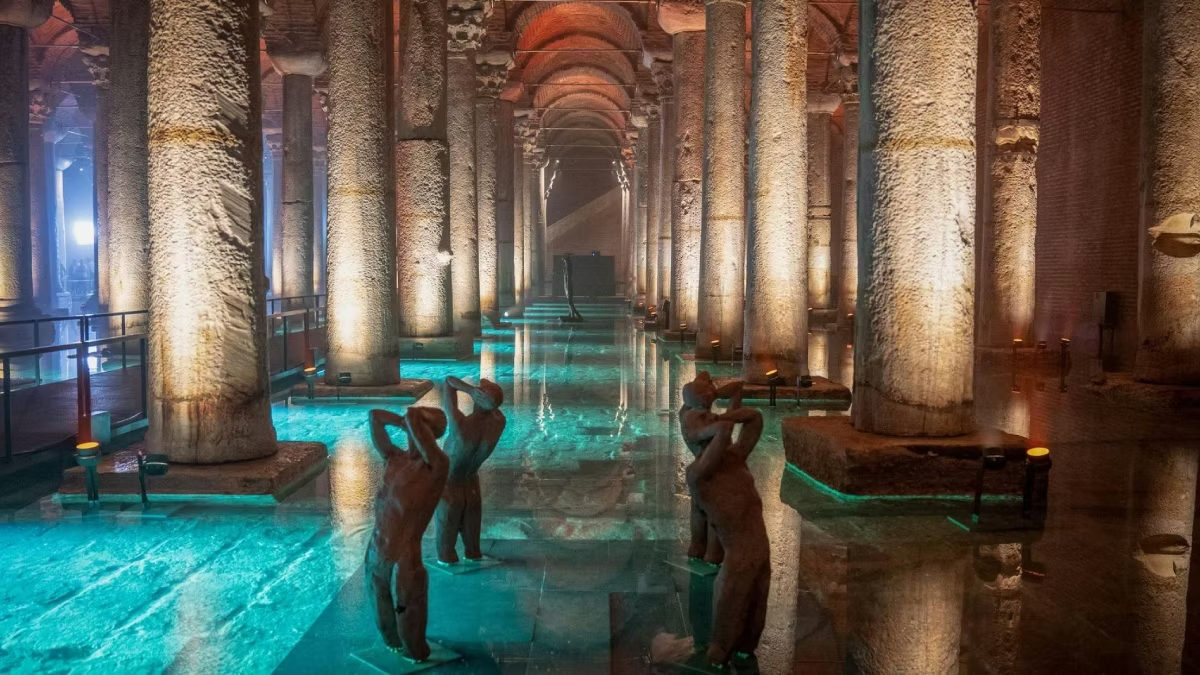
Yes, there are still fish in the Basilica Cistern — primarily carp (possibly koi, also native Anatolian carp species) swimming in the shallow water below the visitor walkways. The fish population has been documented in the cistern since at least the 16th century, when Petrus Gyllius mentioned locals catching fish through basement floor holes. Traditionally, the fish serve as living water-quality indicators — their survival signals clean water, while their distress signals contamination. Reports confirm carp are still visible as of 2026, though population numbers appear lower post-2022 restoration than in earlier decades due to reduced water depth. The fish are best visible when standing near walkway edges and looking directly down — they’re lazy, largely motionless, and easy to miss in the atmospheric lighting.
The fish in the Basilica Cistern are one of the cistern’s most unexpected features. Most visitors descend expecting ancient architecture, atmospheric lighting, and the Medusa heads — and are genuinely surprised to see living fish swimming in the shallow water below their feet. The fish aren’t ornamental; they’re part of a biological tradition going back centuries, serving practical functions in water management and — in the cistern’s modern museum era — adding a living element to an otherwise static archaeological site.
This article covers the fish’s history in the cistern, which species are actually present, the traditional water-quality role, the impact of the 2022 restoration on the population, and practical tips for spotting fish on a visit. All information reflects confirmed 2026 conditions.
Are There Still Fish in the Cistern? (The Short Answer)
Yes. As of 2026, the Basilica Cistern still has fish swimming in the shallow water beneath the visitor walkways. Multiple post-2022 visitor reports, travel writing, and photographs confirm ongoing fish presence. However, a few things have shifted with the 2022 restoration:
- Water depth is lower than in earlier decades — now maintained at roughly 30–50 cm rather than the metre-plus depths of previous eras
- Fish visibility varies depending on water clarity and lighting on a given day
- Population numbers may be lower than in peak historical periods — some older visitors returning post-restoration report fewer visible fish than they remember
- The fish concentrate in deeper sections of the walkway route, particularly toward the northwest corner
If seeing fish is a priority for your visit, look carefully near the edges of the walkways where the water is deepest. The fish are often stationary or slow-moving and easy to overlook in the atmospheric lighting.
What Species Are Actually There
The species identification of the cistern’s fish is slightly contested:
Primarily carp
The dominant population is carp (Cyprinus carpio and possibly related species). These are bottom-dwelling freshwater fish native to Europe and Asia, long established in Turkish waterways. They’re hardy, tolerate low-oxygen and low-light conditions, and can survive in relatively confined water bodies — making them natural candidates for cistern life.
The cistern’s carp are:
- Pale or mottled in colouration — years of low-light conditions have reduced pigmentation in some individuals
- Relatively large — reports describe specimens in the 30–60 cm range
- Slow-moving — the calm water and confined space mean the fish don’t swim actively most of the time
- Long-lived — carp can survive for decades, so individual fish in the cistern may be many years or generations old
Possibly koi
Some sources identify the fish specifically as koi (Cyprinus carpio koi) — the ornamental variety of common carp bred for distinctive colouration. One source suggests koi were deliberately introduced to the cistern “by the Ottoman Turks in the 16th century,” though this specific claim should be treated cautiously — Ottoman-era koi stocking isn’t well documented in historical records.
The “koi” identification is probably loose — most of the cistern’s fish appear to be common carp rather than the brightly-coloured ornamental koi varieties typical of Japanese gardens. But some individuals with unusual markings do exist.
Other possible species
Minor populations may include:
- Goldfish (Carassius auratus), closely related to carp and long present in Turkish waters
- Native Anatolian freshwater species that could have entered through underground aquifer connections
- Tilapia or catfish, though direct evidence for these is limited
Definitive species identification would require formal ichthyological survey work, which doesn’t appear to have been publicly published for the cistern specifically.
The Historical Record: Fish Since the 16th Century
The earliest documented fish presence in the cistern comes from Petrus Gyllius, the French scholar who rediscovered the cistern in 1545:
Gyllius’s 16th-century account
In his De Topographia Constantinopoleos (1561), Gyllius described how local residents of the district already knew about the underground cavity beneath their houses. They drew water from it through basement holes — and, notably, caught fish from it. Gyllius wrote that locals would “illuminate the space with lamps and fish” through openings in their basement floors.
The presence of fish in Gyllius’s account proves two things:
- The cistern was a functional aquatic ecosystem by the 16th century, not just a water tank — it had fish populations stable enough to be fished
- The fish predated Ottoman management — they were already there when Constantinople fell in 1453 and may date back to Byzantine-era stocking or natural colonisation
Where the original fish came from
Several possibilities for the original fish source:
- Deliberate Byzantine stocking — Roman and Byzantine water management commonly included fish as living water-quality indicators. Fish death signalled contamination; fish survival signalled safe water
- Natural colonisation through the aqueduct system — the cistern was connected via the Valens Aqueduct to water sources in the Belgrade Forest, potentially carrying fish eggs or small fish downstream
- Groundwater infiltration — the cistern sits in a city built over a complex aquifer system; fish could have entered through underground connections
- Ottoman-era stocking — post-1453 Ottoman water management may have added fish, either deliberately or through changing water-source connections
Most likely the population reflects a combination: initial Byzantine stocking, maintained and augmented over centuries, with natural reproduction sustaining the population through the cistern’s dormant periods.
The Fish as Water-Quality Indicators
The most important traditional role of the cistern’s fish wasn’t aesthetic or recreational — it was practical water-quality monitoring:
How the system worked
In pre-modern water management, without chemical testing equipment, living organisms served as environmental sensors. For drinking water reservoirs:
- Healthy fish indicated water safe for human consumption
- Dying or dead fish indicated contamination, requiring investigation
- Behavioural changes (fish gasping at the surface, avoiding certain areas) suggested localised problems before they became widespread
The cistern’s fish would have provided continuous environmental monitoring without requiring any technology or specialised labour. Byzantine and Ottoman engineers knew the system: if fish thrived, the water was fine; if fish died en masse, the water needed investigation and possibly cleaning.
Modern parallel
This approach isn’t archaic — modern water treatment facilities sometimes use “sentinel organisms” (often fish, daphnia, or algae) to detect contamination before chemical testing can identify it. The Byzantine system was essentially primitive biomonitoring, using the same principles still applied today.
Why this matters for understanding the cistern
The fish weren’t an afterthought or accidental colonisation that persisted — they were an intentional part of the cistern’s water management system, functioning alongside the brick vaults, waterproof mortar, and aqueduct connections as integrated infrastructure. Understanding this helps explain why the fish population was tolerated and maintained across centuries, even as the cistern’s role shifted from imperial reservoir to Ottoman water source to tourist attraction.
The 2022 Restoration and the Fish
The comprehensive 2020–2022 restoration raised legitimate concerns about the fish population. Extensive work during restoration included:
- Partial water drainage to access the original 6th-century brick floor
- Removal of accumulated sediment (approximately 1,600 cubic metres)
- Installation of new modular steel walkways requiring intervention in the water
- Upgraded lighting with new LED systems
- Earthquake reinforcement including new stainless-steel tension rods
How the fish survived
Reports from the restoration period suggest the fish were handled carefully:
- Fish were likely transferred to temporary holding tanks during the most intensive drainage phases
- Water quality was monitored during restoration
- The final reopening in 2022 included fish visible in the restored environment
Multiple visitor reports from 2023–2026 confirm carp are still present, swimming in the shallow water under the new walkways.
Post-restoration changes
The fish habitat is noticeably different post-2022:
- Lower water depth (30–50 cm) limits fish size and activity range
- Brighter lighting in some sections may stress fish accustomed to darker conditions
- Cleaner water post-restoration may paradoxically reduce fish food sources (less accumulated sediment means less organic material for bottom-feeding carp)
- Modular steel walkways cast different shadow patterns than the previous concrete walkways
Some visitor reports note fewer fish visible now than remembered from pre-restoration visits. Whether this reflects an actual population decrease or just changed viewing conditions isn’t clear without formal population surveys.
Management approach
The Istanbul Metropolitan Municipality (through Kültür AŞ) manages the cistern as a museum and heritage site. Fish management isn’t a primary focus — the fish are essentially maintained as a legacy biological presence rather than actively bred or managed as an ornamental population.
If you’re concerned about the fish’s long-term future, note that they’ve survived 1,500 years of varying conditions in the cistern, including multiple Ottoman restorations and the 1985–1987 modern cleaning. The current 2022 conditions are probably no more stressful than earlier historical periods.
How to Spot the Fish on a Visit
Practical tips for fish-watching:
Where to look
- Stand near the walkway edges and look directly down at the water
- Focus on deeper sections rather than the shallowest patches
- Check near the Medusa heads area — the deeper northwest corner often has more visible fish
- Look for movement or shadow changes at the water surface — fish are often still but create ripples when they shift
When fish are most visible
- Midday (12:00–14:00) — brightest ambient light penetrates deepest into water
- Less crowded periods — calm water shows fish better than water disturbed by crowd movement
- During evening hours (19:30–22:00) — atmospheric lighting can sometimes highlight fish better than daytime flood lighting
What you’ll actually see
Realistic expectations:
- Most fish are largely motionless — carp don’t swim actively in confined spaces
- Colouration is muted — you’re not seeing bright koi; expect grey, brown, or pale mottled fish
- Size varies — some individuals are 30–60 cm, easily visible; smaller juveniles are harder to spot
- Numbers per section vary — you might see 3–5 fish in a single area or none in another
Photography
- Polarising filters help cut surface reflections and reveal fish below the water
- Long exposure can show fish trails and movement (tripods prohibited, so this requires steady hands)
- Flash is prohibited and disturbs fish anyway
- Use your phone camera with exposure compensation to brighten the water specifically
- Be patient — fish move slowly; waiting 30–60 seconds often produces a better shot than quick snaps
Don’t disturb the fish
- Don’t throw anything into the water (coins, food, debris)
- Don’t try to feed the fish — they have established feeding patterns and food waste damages water quality
- Don’t reach into the water — clearly prohibited and harmful to fish health
What About Catching Fish?
Petrus Gyllius’s 1545 account specifically mentions locals catching fish from the cistern. This is obviously no longer possible or permitted:
- The cistern is a museum and UNESCO-listed heritage site — fishing would violate multiple layers of legal protection
- The fish are protected as part of the cistern’s biological and historical heritage
- Visitor walkways don’t allow direct water access except at the Medusa heads viewing platform
Some modern travel writers have joked about attempting cistern fishing, with one blogger famously describing packing a fly rod in hopes of evading “the Turkish polis.” These accounts are humorous rather than serious — don’t actually attempt fishing.
Why the Fish Matter
Beyond their novelty value, the cistern’s fish are significant for three reasons:
They’re living links to Byzantine water management
The fish represent direct biological continuity with the cistern’s original function. The carp in the water today are descendants (or at least successors) of fish that served practical roles in Byzantine and Ottoman water management. Few heritage sites offer living components that connect to original function — most are frozen artefacts. The cistern’s fish aren’t.
They humanise the cistern
An empty stone cavern is impressive but impersonal. The presence of living creatures — fish that move, respond to light, exist on a biological schedule different from the visitor experience — makes the cistern feel like a place rather than just a monument. Visitors consistently report the fish as among the most memorable elements of their visit, disproportionate to the fish’s actual visual impact.
They illustrate an older relationship with infrastructure
In modern water management, we separate drinking water from living ecosystems — treatment plants are sterilised, tanks are sealed, fish are kept out. The Byzantine approach was different: living organisms coexisted with the water supply as integrated monitoring. The cistern’s fish embody that older integration, preserving a water-management philosophy that modern infrastructure has largely abandoned.
Frequently Asked Questions
Are there really fish in the Basilica Cistern?
Yes. Fish — primarily carp — live in the shallow water below the visitor walkways. The population has been documented since at least the 16th century.
What species of fish are in the cistern?
Primarily carp (Cyprinus carpio). Some sources identify them specifically as koi (ornamental carp). Minor populations of goldfish or other freshwater species may be present.
Did the 2022 restoration kill the fish?
No. The fish population survived the 2020–2022 restoration. Fish were likely transferred to holding tanks during intensive drainage phases and returned afterward. Carp are visible in the cistern in 2026.
How many fish are there?
No definitive count exists. Visitor reports suggest dozens to hundreds of fish throughout the cistern. Population numbers may be lower post-restoration than in earlier decades, but fish remain clearly visible.
How long have there been fish in the cistern?
Fish are documented in the cistern since at least 1545 (Petrus Gyllius’s account). They may have been present from the Byzantine era — possibly stocked intentionally as water-quality indicators.
Can I feed the fish?
No. Don’t throw food or anything else into the water. Feeding disrupts fish health and damages water quality.
Can I photograph the fish?
Yes, without flash. The fish are often stationary and poorly lit, so patience and good composition matter. A polarising filter helps reduce surface reflections.
Why are the fish pale?
Extended time in low-light conditions can reduce pigmentation in carp. Some cistern fish are unusually pale compared to typical outdoor carp populations.
How deep is the water now?
Approximately 30–50 cm post-2022 restoration — significantly shallower than the metre-plus depths common in earlier eras. The shallow water preserves the cistern’s aquatic character while allowing better visitor viewing.
Where’s the best place to see the fish?
Near the walkway edges, especially in deeper sections toward the northwest corner. Look directly down into the water; fish are often motionless and easily overlooked.
Do the fish reproduce in the cistern?
Probably yes — carp are capable of reproducing in enclosed water bodies, and the population has persisted for centuries without obvious external stocking in modern times. However, formal population studies don’t appear to have been published.
Is fishing allowed?
Absolutely not. The cistern is a museum and UNESCO World Heritage site. Fishing would violate multiple legal and ethical protections.
Why do the fish matter historically?
They represent direct biological continuity with the cistern’s original function as Byzantine water-management infrastructure. The carp system was part of traditional pre-modern water-quality monitoring, making the fish a living component of the cistern’s historical identity rather than just ornamental residents.
