
Basilica Cistern Accessibility: Wheelchair, Stroller & Mobility Guide
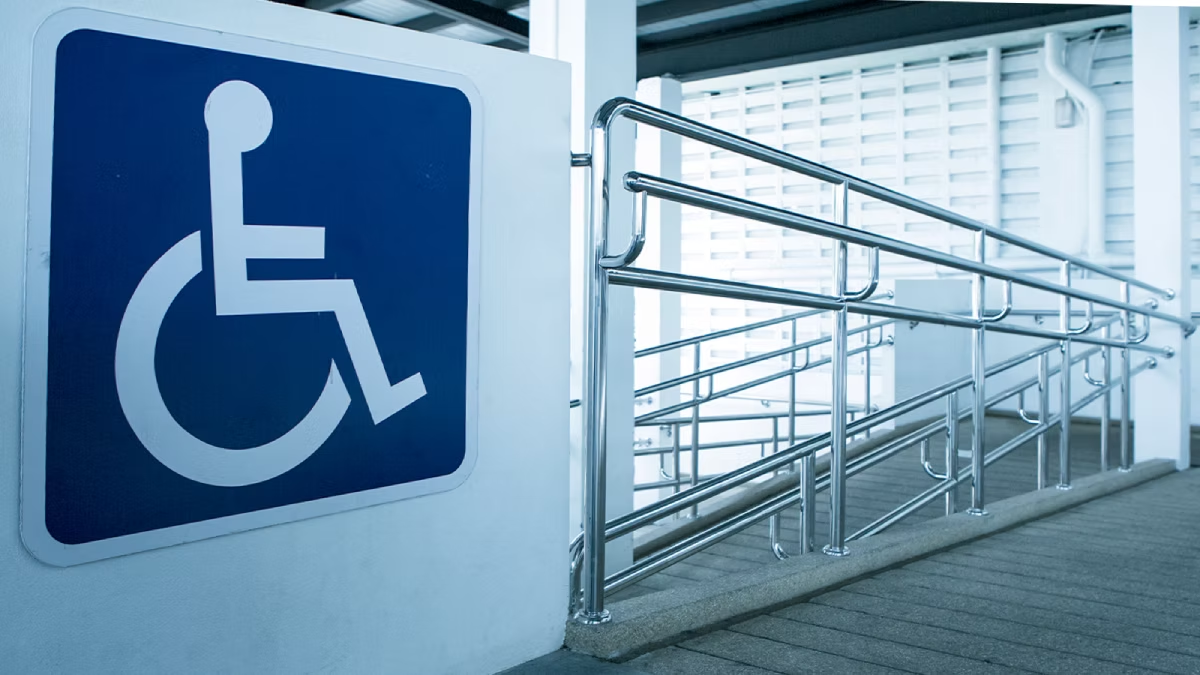
The Basilica Cistern is wheelchair accessible, but only via a platform lift at the exit on Alemdar Street — the main entrance on Yerebatan Caddesi has 52 stone steps and is not step-free. Inside, the raised steel walkways are generally step-free, though narrow in places and slippery in the damp. Entry is free for visitors with a documented disability and one accompanying companion. Strollers and pushchairs are permitted throughout. There is only one wheelchair lift, so wait times of 20–30 minutes are common when two or more wheelchair users arrive together.
The Basilica Cistern’s accessibility story is a mix of genuine progress and practical limits. The 2022 restoration replaced narrow, uneven walkways with modern raised steel platforms and installed a wheelchair lift at the Alemdar Street exit — making the site meaningfully usable for mobility-limited visitors for the first time in its modern history. But the cistern is a 1,500-year-old underground structure, and some constraints can’t be designed away: the descent is steep, the environment is damp, the walkways narrow in places, and the single lift creates bottlenecks during busy hours.
This guide covers exactly what to expect if you use a wheelchair, walk with difficulty, push a stroller, or have sensory, cognitive, or health considerations that affect how you visit. All details reflect the current 2026 site layout.
The Critical Detail: Two Different Entrances
Most visitors enter through the main gate on Yerebatan Caddesi, directly opposite Hagia Sophia. That entrance has 52 stone steps descending into the cistern and no ramp or lift. It is not suitable for wheelchair users.
Wheelchair users must use the cistern’s exit on Alemdar Street, not the main entrance on Yerebatan Caddesi. The Alemdar Street exit has a platform lift that lowers visitors down to the main walkway level. Staff at the main entrance will direct wheelchair users around to Alemdar Street on request. The two points are about 100 metres apart on foot.
The accessible entrance is the cistern’s exit, on Alemdar Street near the T1 tram line. A platform lift there descends to the same main walkway level everyone else uses. The process:
- Purchase or show your ticket at the main entrance on Yerebatan Caddesi (staff will direct you)
- Walk (or be pushed) around the block to Alemdar Street — about 100 metres, flat, cobblestoned
- Staff at the Alemdar lift operate it for you; expect a short wait if other wheelchair users are also arriving
- The lift descends to the walkway level. From there you can move through the cistern in reverse of the usual direction, exiting back up the same lift when done.
Wheelchair Access: What to Expect
Getting to the cistern
The walk from Sultanahmet tram stop to either the main entrance or the Alemdar Street lift is step-free and flat, though the pavement is cobblestoned in stretches. A manual wheelchair with a companion is comfortable; a powered wheelchair handles it easily. See our how to get there guide for full route details.
The lift itself
A single platform lift operates at the Alemdar Street access point. It’s designed for one wheelchair user plus a companion at a time. Key points:
- The lift is operated by cistern staff, not self-service
- Wait times range from 5 minutes when quiet to 25–30 minutes when multiple wheelchair users arrive together
- The lift takes you directly to the main walkway level — no additional steps between the lift and the cistern interior
- There is no separate ticket queue at the Alemdar access; bring your ticket pre-purchased or pay at the main entrance first
Inside the cistern
The 2022 restoration installed modern steel mesh walkways throughout the cistern, replacing the older narrow wooden platforms. The interior is broadly step-free from the lift to the Medusa Heads and back:
- Main walkway: Flat, step-free, wide enough for a wheelchair to pass another visitor in most sections
- Medusa Heads corner: Accessible, though the walkway narrows near the column bases. Powered wheelchair users may need to reverse back to turn around — there’s no full circulation loop at the corner
- Central hall: Fully accessible
- Crying Column: Accessible but the viewing angle is slightly oblique — you may need to lean to see the teardrop carvings clearly
- Contemporary art installations: Positioned on raised plinths off the walkway; viewable but not always at eye level
What’s not accessible
- The original stone floor of the cistern (where the water pools) — no visitor walks on this, accessible or not
- A few secondary walkway branches that have one or two steps — these all lead to the same main views, so nothing unique is missed
Challenges to be aware of
- Damp walkway surfaces: The steel mesh is slightly slick in places. Most modern wheelchair tyres grip well, but it’s noticeable.
- Dim lighting: The cistern is deliberately atmospheric and dimly lit. Visitors with low vision may find orientation harder than in a standard museum.
- Ceiling drip: Water drips from the vaults at random intervals. Carry a light cover if moisture sensitivity is a concern.
- Narrow passing points: Two-way traffic on the walkway occasionally requires one wheelchair to pause while another passes. Not a barrier, but a small delay.
Manual Wheelchairs and Loaner Equipment
The cistern does not loan wheelchairs. You must bring your own. If you’re travelling without a chair but need one for the visit, rental options in Istanbul are limited — some larger hotels and specialised mobility services can arrange it, but advance notice of 48 hours is usually required.
Companions can push manual wheelchairs throughout. The walkways are wide enough for one wheelchair plus one companion side-by-side in most sections.
Strollers and Pushchairs
Strollers are permitted throughout the Basilica Cistern. Practical points:
- Use the same Alemdar Street lift access to avoid the 52 steps at the main entrance. Some families with foldable strollers fold them and carry down the stairs — this is allowed but awkward.
- Inside, the walkways accommodate standard-sized strollers. Very large double strollers and all-terrain joggers are harder to manoeuvre through the narrower sections.
- The ceiling drip affects strollers more than adults — a stroller rain cover or blanket over the top keeps sleeping babies dry.
- The damp, cool conditions (16–18°C, high humidity) are fine for children but bring an extra layer for babies and toddlers.
For general advice on visiting with young children, see our visiting with kids guide.
Disability Ticket Policy and Discounts
Entry is free for visitors with a documented disability and one accompanying companion. You need to show:
- A valid disability card or medical documentation (Turkish or international, usually accepted)
- Photo ID matching the disability documentation
The free entry applies to both daytime and Night Shift sessions. The complimentary companion also enters free.
Children under 7 enter free regardless of disability status. Licensed tour guides enter free when accompanying a paying group.
Visiting with Limited Mobility (Not a Wheelchair User)
If you walk with difficulty but don’t use a wheelchair — common scenarios include older visitors, post-surgery recovery, chronic joint conditions, or visible mobility impairments — you have a choice between:
Using the main entrance (52 steps down, 52 steps up): Manageable if you take the steps slowly, and there’s a handrail on one side. Many visitors with mild mobility limitations do this. The steps are stone and slightly worn, not steep.
Requesting the Alemdar Street lift: Available to anyone who cannot use stairs, not just wheelchair users. Explain at the main entrance and staff will direct you around. The lift is the safer option for visitors with balance issues, recent surgery, or reliance on walking aids like canes and walkers.
Inside, benches are limited — the cistern is designed for movement rather than lingering. There are a few seating points near the contemporary art installations. If you need to rest mid-visit, pausing against a handrail is acceptable and common.
Visitors with Visual or Hearing Impairments
Low vision: The cistern is intentionally dimly lit and may present orientation challenges. Companions are recommended. The raised walkways have high-contrast edges where the mesh meets the handrail. Audio guides are helpful because much of the site is about stories and history rather than detailed visual features.
Blind visitors: There are no tactile maps or raised models currently, and no Braille signage. Audio guides provide rich narration. The Medusa Heads are behind a barrier and cannot be touched. A sighted companion makes the visit meaningfully richer.
Deaf and hard of hearing: The audio guide is available in 25+ languages as narrated audio; transcripts and subtitled versions are inconsistently available. Written information panels are positioned at key spots (Medusa Heads, Crying Column, entrance history) and provide the core historical content in English and Turkish. Sign language tours are not offered by the site itself but can be arranged through private Istanbul tour operators.
Sensory and Cognitive Considerations
The Basilica Cistern is a distinctive environment that may be overstimulating for some visitors. Key factors:
- Low, atmospheric lighting with colour shifts (reds, blues, ambers)
- Echoing acoustics — voices and footsteps carry
- Occasional music during Night Shift sessions
- Narrow walkways with crowds at peak times
- Unexpected water drops from the ceiling
For visitors with autism, sensory sensitivity, or anxiety in enclosed spaces:
- Visit during low-crowd windows (09:00–10:30 weekday, winter months) — see our opening hours guide
- Avoid Night Shift sessions initially; the darker lighting and occasional music amplify sensory intensity
- The visit is one-way through — there’s no requirement to stay for a set duration; visitors leaving early is common and not awkward
- The exit lift can be used to leave quickly if the environment becomes overwhelming
Medical Considerations
Claustrophobia: The cistern is a large underground space (about 140m × 70m) with a 9-metre-high vaulted ceiling, so it’s less enclosed than many underground sites. But it is underground, with limited natural light and a single entrance/exit path. Visitors with significant claustrophobia should consider a short trial — the full visit can be cut to 15 minutes if needed.
Respiratory conditions: The air is cool and very damp (96% humidity) but clean and well-circulated thanks to passive ventilation. Most visitors with mild asthma report no issues. Severe respiratory conditions may find the humidity tiring.
Mobility devices with batteries: Powered wheelchairs and mobility scooters are welcome. Bring chargers for longer days — the cistern visit itself is 60–90 minutes and uses minimal power.
Toilets and Facilities
On-site toilets: Not available inside the cistern. Plan your toilet break before entering. The nearest accessible public toilets are at Hagia Sophia (across the street) and in Gülhane Park, both within a 3-minute journey.
Cloakroom: There is no cloakroom at the cistern. Large bags, suitcases, and wheelchairs with removable accessories can’t be stored on-site.
Café/refreshments: Not available inside. Plenty of accessible cafés line Yerebatan Caddesi and the square around Hagia Sophia. See our where to eat guide for step-free options.
Planning an Accessible Visit: Key Steps
If you or someone in your group has specific access needs, we’d suggest this rough plan:
- Book a timed ticket in advance — this reduces ticket-desk queue time, which is not wheelchair-friendly in peak season
- Arrive outside peak hours (09:00–10:30 or 16:30–18:30) to minimise lift wait times
- Go to the main entrance on Yerebatan Caddesi first to show your ticket and disability documentation
- Request access via the Alemdar Street lift — staff will direct you around
- Budget 90 minutes for the whole experience, allowing for the lift wait on entry and exit
Frequently Asked Questions
Is the Basilica Cistern wheelchair accessible?
Yes, via a platform lift at the exit on Alemdar Street. The main entrance on Yerebatan Caddesi has 52 stone steps and is not accessible. Inside, the raised steel walkways are generally step-free, though narrow in places.
Is there a lift at the Basilica Cistern?
Yes — one wheelchair-accessible platform lift, located at the Alemdar Street exit, not at the main Yerebatan Caddesi entrance. Because there’s only one lift, wait times can reach 20–30 minutes when multiple wheelchair users arrive together.
Do I need to book a special ticket for wheelchair access?
No. Any standard ticket works. Entry is actually free for visitors with a documented disability and one companion — show your disability card at the main entrance and staff will waive the entry fee.
Can I bring a stroller into the Basilica Cistern?
Yes. Strollers are allowed throughout, though you’ll want to use the Alemdar Street lift rather than carrying the stroller down 52 steps at the main entrance. Standard-sized strollers fit comfortably on the walkways; oversized double or jogging strollers are harder to manoeuvre.
Can I rent a wheelchair at the Basilica Cistern?
No. The cistern does not loan wheelchairs — you must bring your own. Istanbul does have private rental services, but these usually require 48 hours’ notice and hotel collaboration.
Is the Basilica Cistern suitable for visitors with limited mobility who don’t use a wheelchair?
Yes, with choices. The main entrance’s 52 steps are manageable for many visitors if taken slowly with a handrail. Anyone who can’t manage stairs can request the Alemdar Street lift, which is available to any visitor with mobility challenges, not just wheelchair users.
Are there benches or places to sit inside?
Limited. The cistern is designed for movement rather than extended sitting, and benches are scarce. A few seating spots exist near the contemporary art installations. Pausing against a handrail mid-visit is acceptable.
Is the Basilica Cistern accessible for people with visual impairments?
Partially. Audio guides provide rich narrative content that works well for low-vision and blind visitors. There are no tactile models, Braille signage, or guided sensory tours run by the site. The dim lighting is challenging, so a sighted companion is recommended.
Can deaf or hard-of-hearing visitors follow the site content?
Yes. Written information panels in English and Turkish cover the main historical context at key spots. Sign language tours are not offered by the site but can be arranged through private tour operators in Istanbul.
