
Visiting the Basilica Cistern with Kids
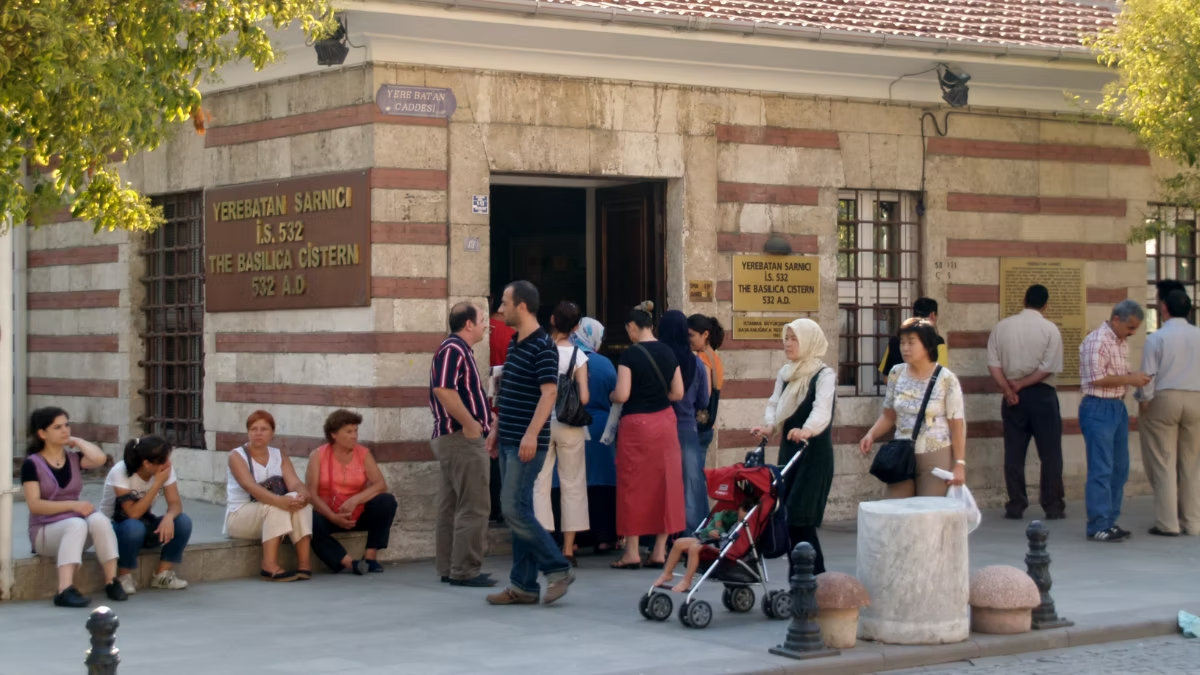
The Basilica Cistern is suitable for most children and works especially well for kids aged 5 and up who enjoy castles, caves, or mythology. Children under 7 enter free. Strollers are allowed, the site is step-free via the Alemdar Street lift, and the Medusa Heads and fish in the water are genuine kid magnets. Budget 60 minutes with younger children, 90 minutes with curious older ones. Avoid peak midday crowds and the Night Shift session (too dark for under-7s). The interior is cool, damp, and dimly lit — bring a light layer and keep toddlers within arm’s reach on the walkways.
The Basilica Cistern is one of those Istanbul attractions that surprises parents. It’s atmospheric, underground, and visually dramatic in a way that tends to hold kids’ attention far longer than a standard museum. The Medusa heads tap straight into the Percy Jackson generation. Fish swim in the shallow water. The red-and-amber lighting feels like something out of a video game. And unlike Hagia Sophia or Topkapı Palace — both of which require a specific kind of patience from children — the cistern’s single-loop walkway keeps the visit short and intuitive.
That said, it’s still a damp, dim underground space with narrow walkways and real safety considerations. This guide covers what ages it works best for, how to prepare kids before the visit, what to actually do inside with them, and the practical logistics of doing it with strollers, toddlers, or multiple children.
Is the Basilica Cistern Good for Kids?
Yes, with age as the main variable. Here’s how it tends to land by age group, based on what families actually report:
Babies (0–18 months): Fine in a carrier or stroller. The cool air and dim lighting often send babies to sleep. No real engagement with the site, but no issues either.
Toddlers (18 months–3 years): The tricky age. Toddlers love walking the mesh walkways but also love reaching for the water, leaning over the railings, and running ahead. Manageable with attentive parents, but not relaxing. Shorter visit (30–40 minutes) works best.
Preschool (3–5 years): Often the magic window. Kids this age are tall enough to see over the railings, captivated by the columns and water, and just starting to understand the idea of “something really old.” Keep it short and find the Medusa Heads fast.
Primary school (5–10 years): The strongest fit. This age group has the attention span for a 60–90 minute visit, the background to appreciate a little history, and enough mythology exposure (via books, shows, or school) to find the Medusa Heads genuinely thrilling. This is the age where the visit can be the highlight of their Istanbul trip.
Tweens and teens (10+): Works well if they’re history or photography inclined. Teens who dislike museums may find the cistern more engaging than Topkapı Palace because the visit is short and visually immersive. A phone with night-mode camera gives them something to do.
How Long to Spend with Kids
Plan conservatively. What feels like “a quick walk around one room” to adults can feel like a lot of input for small children, especially combined with queueing, security, and the descent.
- With toddlers (1–3): 30–45 minutes inside
- With preschoolers (3–5): 45–60 minutes inside
- With primary-aged kids (5–10): 60–90 minutes, with stops
- With teens: 60–90 minutes, more if they want to photograph
Factor in 15–30 minutes of queue/security time on top. See our full visit duration guide for the adult baseline.
The Best Time to Visit with Kids
Crowd management matters more with children than it does for adult visitors. At peak times the walkways can feel jostling and stressful, especially with strollers or toddlers. Our opening hours guide has the full crowd breakdown, but the shorthand for families:
- Best window: 09:00–10:30 on a weekday. Genuinely uncrowded, kids are fresh, no midday meltdown risk.
- Second best: 16:30–18:30 weekday. Quiet again, but watch for tired children.
- Avoid: 11:00–15:00, especially summer weekends. Dense crowds, long security queues, overheated kids waiting outside.
- Don’t bring under-7s to the Night Shift: The 19:30–22:00 session is deliberately dark, sometimes has live music, and is past most young kids’ bedtime. Older children (10+) who are night owls may enjoy it.
What Kids Actually Like Inside
Before you go, it helps to know which features reliably work for children. Every family we’ve seen report back flags the same four things:
1. The Medusa Heads
By a wide margin the biggest hit. The two carved Medusa heads — one on its side, one upside down — in the northwest corner. If your kid has read any Greek mythology, seen Percy Jackson, or even just heard “Medusa turns people to stone,” they’ll be riveted.
Before the visit, give them the one-sentence version: “Medusa was a monster with snakes for hair, and people turned to stone if they looked at her — and these heads are 1,500 years old, older than anything they’ll see in a school book.” It’s a genuinely perfect story setup for a 5-year-old.
Pro tip: the walkway at the Medusa Heads narrows and bottlenecks in peak hours. Early arrival means you can actually stop, point, take a photo, and answer questions without holding up a queue.
2. The fish in the water
There are still fish swimming in the shallow water between the columns — small freshwater fish, visible from the walkway when the water is clear. Kids usually spot them within the first minute. For toddlers especially, this becomes the main attraction regardless of what the adults came to see.
3. The atmospheric lighting
The 2022 restoration lighting scheme uses shifting reds, ambers, and blues. Young kids often describe it as “like a cave in a video game” or “like the secret level.” The lighting changes slowly — sitting on a bench or pausing near a column for a minute lets them see it cycle.
4. The scale and the echo
Kids who’ve never been somewhere truly cavernous often react strongly to the sheer size of the space. Encouraging them to whisper and listen to the echo, or count columns in a row, turns the visit into a game rather than a guided walk.
What Kids Tend NOT to Engage With
Managing expectations is part of this:
- The audio guide. Narrated history doesn’t hold kids under 10, and the guide is long and adult-pitched. Skip it for a family visit.
- The detailed history panels. Interesting but text-heavy. Don’t plan on reading them aloud.
- The contemporary art installations. Abstract and subtle; usually ignored by under-10s.
- The Crying Column. The teardrop carvings are subtle, and the story — tears commemorating slaves — is hard to land with small children without either over-simplifying or over-darkening.
Practical Logistics for Families
Getting in with a stroller
Do not use the main entrance on Yerebatan Caddesi with a stroller — it has 52 stone steps. Go around to the Alemdar Street exit, where there’s a wheelchair lift you can use for strollers too. Staff will direct you. Full lift details are in our accessibility guide.
Some families with foldable, lightweight strollers fold them and carry down the main entrance stairs. This works but is unpleasant with a baby in one arm.
Carrier vs. stroller
For children who still nap or get tired, a front carrier or soft backpack carrier is often better inside the cistern than a stroller. Reasons:
- The walkways are narrow, and a stroller slows you down at passing points
- Carrying lets you get closer to features like the Medusa Heads
- Small kids in a stroller often can’t see over the railing
For a 90-minute visit with a 2-year-old, a carrier is usually the winning choice.
Food, water, and toilets before you enter
- No food or drink allowed inside. Finish snacks and water bottles before entry.
- No toilets inside. The nearest public toilets are at Hagia Sophia (across the street), Gülhane Park, or any of the cafés along Yerebatan Caddesi.
- No baby-changing facilities at the cistern. Change the baby before you go in. Hagia Sophia’s visitor facilities or a nearby café are your fallback.
Safety inside
Real but manageable. The main risks:
- Slippery walkway: Damp steel mesh; kids running or in poor footwear can slip. Closed shoes with grip, walking not running.
- Railings and drops: The walkway is raised above the shallow water. Railings are at adult waist height, so younger kids can lean over. Keep little ones within arm’s reach.
- Water access: You can’t reach the water directly from the walkway, but children can dangle hands if reaching between bars — discouraged by staff.
- Low light: Steps and transitions can be hard for small children to see. Hold hands at the entrance descent if using the main stairs.
What to bring
See our full what to wear and bring guide for the adult packing list. For families specifically, add:
- A light jacket or blanket for each child (interior is 16–18°C year-round)
- A small towel or bib cloth if you have a baby — ceiling drip does happen
- Closed shoes for walking kids; nothing loose like flip-flops
- Phone or camera fully charged — kids will want photos at the Medusa Heads
- Snacks and water for after the visit, not during
Preparing Kids Before the Visit
A five-minute pre-brief on the morning of the visit genuinely improves the experience. Kids engage more when they know what they’re about to see. The key points:
- What it is: “We’re going underground to see a giant room that’s 1,500 years old — older than any castle you’ve ever seen.”
- What’s inside: “It’s full of marble columns, there are fish swimming in the water, and in one corner there are two carved Medusa heads.”
- The Medusa story: Whatever version is age-appropriate. The myth is the single best hook for kids 5+.
- Ground rules: “No running on the walkways, we hold hands at the stairs, no reaching for the water, and no shouting.”
- What it won’t be: “We’ll only be there about an hour, and then we’ll get lunch.”
For older kids, showing them a photo of the Medusa heads ahead of time builds anticipation. Some parents read the Percy Jackson Medusa chapter together the night before.
Combining with Other Attractions
The cistern is the shortest of the major Sultanahmet attractions, which makes it an excellent palate-cleanser in a family itinerary. A few combinations that work well with kids:
- Hagia Sophia (first) → Basilica Cistern (second): 2.5–3 hours total. Cistern is the reward after the more patience-demanding Hagia Sophia visit.
- Cistern → Gülhane Park: The park next to Topkapı is a free public green space with plenty of room for running off energy. A 7-minute walk from the cistern.
- Cistern only: If you’re on a tight day or have young toddlers, a one-hour cistern-only outing combined with lunch and a park stop is genuinely enough for a full morning.
What not to combine with kids: A full Topkapı Palace visit on the same day. Topkapı is a 3+ hour walking-heavy site that depletes kids fast. Better as its own half-day.
See our nearby attractions guide for full Sultanahmet family itineraries.
Free Entry for Kids
Children under 7 enter the Basilica Cistern free. This applies to both daytime and Night Shift sessions. For older children, the standard adult ticket applies — there is no currently advertised child or family discount at the site level, though some third-party ticket packages may offer family pricing.
Free entry also applies to visitors with a documented disability and one companion, which includes disabled children travelling with a parent.
Frequently Asked Questions
Is the Basilica Cistern suitable for young children?
Yes. The site is family-friendly and children under 7 enter free. Toddlers and up can visit comfortably, though attentive supervision is needed on the narrow walkways and at the raised edges.
Can I bring a stroller inside the Basilica Cistern?
Yes. Strollers are allowed throughout. Use the Alemdar Street lift (the site’s exit) to enter — the main Yerebatan Caddesi entrance has 52 stone steps that are not stroller-friendly.
What age is the Basilica Cistern best for?
Children aged 5–10 typically engage most with the visit. They’re tall enough to see over railings, can handle a 60–90 minute walk, and the Medusa heads and mythology work brilliantly for this age.
Will young children be scared inside?
Most won’t. The lighting is atmospheric rather than spooky, there are other visitors and staff around, and the Medusa heads tend to fascinate rather than frighten. Very sensitive children may find the dim lighting and echoing acoustics unsettling — in which case a short visit and holding hands solves it.
Are there toilets or baby-changing facilities?
No. There are no toilets, baby-changing tables, or refreshment options inside the cistern. Use Hagia Sophia’s visitor facilities or a nearby café before entering.
Can I bring a baby in a carrier?
Yes, and for children up to 2–3 years old, a soft carrier often works better than a stroller because of the narrow walkways and better visibility for the baby.
Is the Night Shift session suitable for kids?
Not for young children. The 19:30–22:00 session is intentionally darker, sometimes has live music, and runs past most under-7s’ bedtimes. Older children (10+) who enjoy atmospheric experiences may find it memorable.
How long should we plan to be inside with kids?
Budget 30–45 minutes with toddlers, 60 minutes with preschoolers, and 60–90 minutes with primary-aged children. Add 15–30 minutes for queue and security time at the entrance.
Can kids take photos inside the cistern?
Yes, with phones or handheld cameras. No flash, no tripods, no selfie sticks. See our photography guide for full rules.
