
What to Wear & What to Bring to the Basilica Cistern
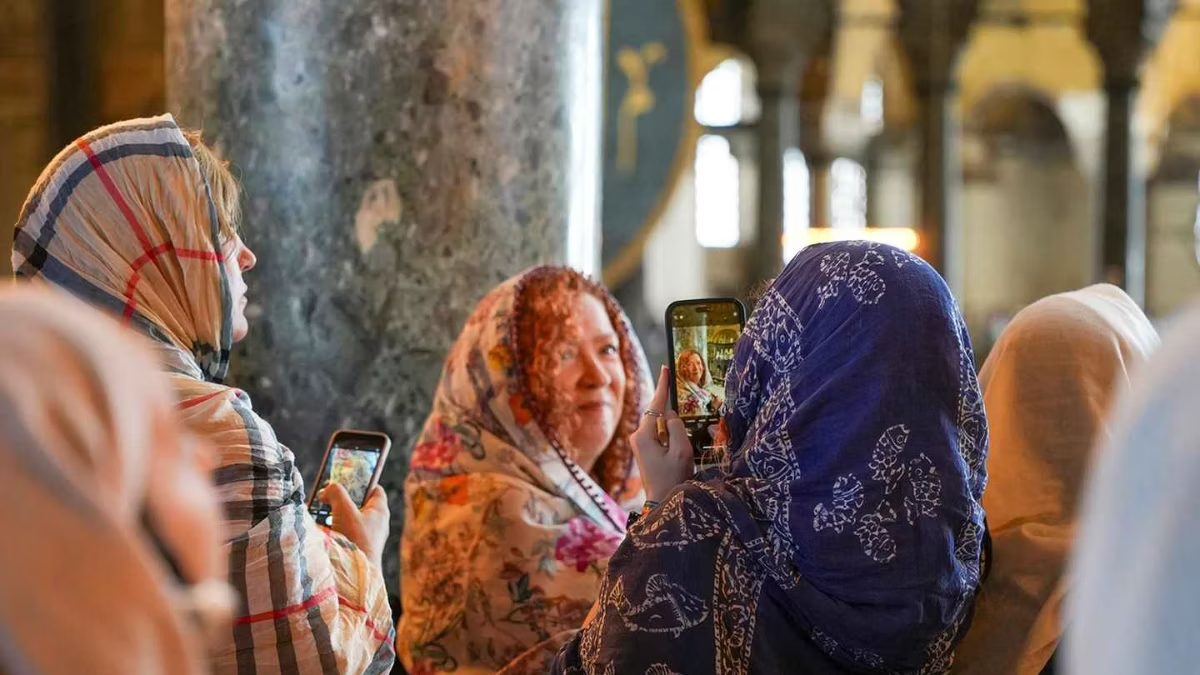
There is no dress code at the Basilica Cistern, but the underground environment is consistently cool (16–18°C), humid (around 96%), and has water dripping from the ceiling. Wear closed-toe shoes with good grip, bring a light jacket or cardigan even in summer, and protect your phone or camera from moisture. Skip tripods, flash units, large backpacks, food, and drinks — none are permitted inside. A water bottle should be finished before you enter.
There’s no formal dress code at the Basilica Cistern, and no one is going to stop you at the door for wearing shorts. But the interior conditions are unusual enough that what you wear materially affects how much you enjoy the visit. The space is a functioning 1,500-year-old underground reservoir with water dripping from the brick-vaulted ceilings, damp walkways, and a temperature that feels bracing after a 30°C Istanbul summer day.
This guide covers what to wear, what to bring, and what to leave behind — all based on current 2026 conditions, with specific attention to the post-renovation walkways and the security rules that changed after the 2022 reopening.
The Interior Conditions You’re Dressing For
Four things shape what you should wear:
Temperature: A consistent 16–18°C year-round, regardless of what’s happening above ground. In July it feels wonderfully cool; in January it’s noticeably warmer than the street. The cistern is essentially a large thermal mass — the 1,500-year-old walls don’t care what the weather is doing.
Humidity: Around 96%. Water clings to everything. Metal handrails are damp to the touch, your glasses may fog briefly when you first descend, and any cold surface will feel wet after a few minutes.
Ceiling drip: Continuous. The brick vaults above the walkway drip onto visitors at unpredictable intervals. It’s not a downpour — it’s a handful of droplets per minute across the whole space. You’ll get spotted rather than soaked. This affects electronics more than it affects you.
Walkway surface: Steel mesh walkway, wet in places, sometimes slippery. The 2022 renovation added modern non-slip surfaces, but ceiling drip combined with foot traffic means puddles form. There are also 52 stone steps at the entrance descent.
What to Wear
Footwear: the single most important choice
Wear closed-toe shoes with decent grip. Rubber-soled trainers, hiking shoes, or flat casual shoes all work well. The combination of damp steel walkways, occasional water pooling, and the descent down 52 stone steps makes grip genuinely important — this is a site where the staff have to assist people who slip.
What to avoid:
- High heels: Not permitted under the current safety rules; the narrow mesh walkways don’t accommodate them.
- Flip-flops or sandals: Allowed, but your feet will get splashed and the grip is poor.
- New leather-soled dress shoes: The grip is minimal on wet steel. Slip risk is real.
Clothing: layer for the contrast
Dress for above-ground Istanbul first, then add one layer for the cistern. In practice:
Summer (June–August): Wear your normal warm-weather clothing — shorts, t-shirt, light dress — and carry a thin cardigan, cotton shirt, or windbreaker in a small bag. You’ll want it about 10 minutes after descending. The 18°C contrast with 32°C street heat feels strong.
Spring and autumn (March–May, September–November): A long-sleeved shirt with a light jumper or fleece is enough. The interior will feel normal to cool; the exit back into sunshine is pleasant.
Winter (December–February): Your normal winter layers are fine. The interior is actually slightly warmer than the street, so you may want to loosen scarves and open coats. A waterproof outer layer is useful anyway for Istanbul’s winter rain.
Hats and glasses
Hats are fine — no religious restriction here (unlike the Blue Mosque). Glasses may fog for the first 30 seconds after you descend. Give them a quick wipe and they’ll be fine for the rest of the visit.
Bags
A small day bag, crossbody, or backpack under 30 litres is comfortable. The walkways are narrow, and a large backpack becomes awkward when passing other visitors. There is no cloakroom or luggage storage at the cistern — if you’re travelling with suitcases or large bags, you’ll need to drop them at your hotel, at your Hagia Sophia or Topkapı Palace visit, or at Sultanahmet or Sirkeci stations before arriving.
What to Bring
Essentials
- Your ticket (printed or on phone). Mobile tickets are scanned at the entry; screen brightness should be up.
- ID/passport. Not always checked, but required if you qualify for concessionary entry.
- Light layer (see above).
- Phone or camera. Worth its own section (below).
Genuinely useful
- Microfibre cloth. For wiping your phone screen, camera lens, or glasses. The humidity puts a film on everything.
- Small pack tissue or bandana. Handy for the ceiling drip if you’re the sort of person who hates water on your head.
- A light plastic/ziplock bag for your phone. Some photographers use a simple dry-bag or ziplock when not shooting, to keep the handset dry in pockets. Not essential but useful.
- Small bottle of water — to finish before entry. You cannot take drinks inside.
If you’re there for photography
See our full photography guide for equipment specifics. Short version: your phone with a lens cloth is enough for most people; a mirrorless or DSLR with a fast lens (f/2.8 or wider) gets significantly better results in the low light. Tripods, monopods, and flash units are not allowed.
What NOT to Bring
The security screening at the entrance (10–15 minutes on busy days) will flag several items. Saving yourself the rework:
- Food and drinks. Not allowed inside. No eating, no drinking, no chewing gum. Finish everything before entry.
- Large backpacks, suitcases, and trolley bags. Too cumbersome for the walkways; there’s no storage on-site.
- Tripods, monopods, and selfie sticks. Banned for safety and to protect the narrow walkway flow.
- Flash photography equipment. Banned to protect other visitors’ experience and ambient lighting.
- Drones. Banned entirely — illegal across Sultanahmet’s protected archaeological zone.
- Umbrellas. Not permitted inside; if it’s raining, you’ll leave the umbrella with the ticket staff.
- Pets. Only certified service animals are allowed.
- Lit cigarettes, e-cigarettes, or vapes. No smoking anywhere in the site.
- Outside water bottles in large sizes. Small sealed bottles finished before entry are fine. Anything open or large gets flagged.
Protecting Your Electronics
This is where the cistern surprises people. Phone damage from humidity and drip is the single most common visitor complaint. Modern phones rated IP67 or IP68 (recent iPhones, flagship Androids) handle the conditions fine for a 90-minute visit. Older or budget phones without water resistance genuinely do get affected — the humidity can fog camera lenses from the inside for 24–48 hours afterwards.
Simple precautions:
- Keep the phone in a pocket when not shooting, not in your hand
- Wipe the lens and screen with a microfibre cloth every 10–15 minutes
- Don’t put a warm phone against a cold damp surface (condensation forms inside the glass)
- If you have a thin silicone or plastic case, that’s enough extra protection for a standard visit
For DSLRs and mirrorless cameras: weather-sealed bodies are fine. Non-sealed cameras are usable for a 90-minute visit but dry them with a microfibre cloth before putting them in a bag. Avoid leaving lenses stored open-mouthed inside the cistern.
Season-Specific Notes
What to bring in summer
Istanbul summer heat genuinely wipes people out, and the cistern is one of the best natural refuges in Sultanahmet. Coming in sweaty and overheated, you’ll cool off fast. Bring the light layer anyway — most people underestimate the contrast. Also bring sun protection for the rest of your Sultanahmet day; a hat and sunscreen for the above-ground stretches.
What to bring in winter
An umbrella for the walk from the tram (not for inside), a warm waterproof jacket, and closed shoes with good grip. Istanbul winter pavements can be surprisingly icy, especially on the slope down from Divanyolu Caddesi. Winter is also when the cistern is at its quietest — see our opening hours guide for crowd patterns.
What to bring for the Night Shift
The Night Shift session has the same dress code and interior conditions as daytime, but the lighting is dimmer. A phone with a reasonable night-mode camera adds a lot. The ceiling drip is the same; the temperature is the same. Bring a layer even in summer.
A Short Packing Checklist
For most visitors, this is the complete list:
- Comfortable closed-toe shoes with grip
- Light jacket or cardigan
- Small day bag (under 30 litres)
- Phone with a microfibre cloth
- Ticket (digital or printed)
- ID/passport
- Water bottle to finish before entry
That’s it. The cistern is not a demanding site to visit — it just has a very specific underground microclimate that rewards five minutes of forethought.
Frequently Asked Questions
Is there a dress code at the Basilica Cistern?
No, there is no formal dress code. Unlike the Blue Mosque, you don’t need to cover your shoulders, knees, or head. Any comfortable clothing works as long as your shoes are closed-toe with decent grip for the damp walkways.
Can I wear shorts and a t-shirt?
Yes, and in summer it’s the sensible choice — but bring a light layer. The interior is 16–18°C regardless of season, which feels noticeably cool after Istanbul’s 30°C+ summer streets.
Do I need to take my shoes off inside the Basilica Cistern?
No. The Basilica Cistern is a museum, not a mosque, so shoes stay on throughout. You walk on raised steel walkways over the water, not on the original stone floor.
Can I bring a backpack or large bag into the Basilica Cistern?
Small day bags and standard backpacks are fine. Large backpacks, suitcases, and trolleys are not — there is no cloakroom or luggage storage on-site, so drop large bags at your hotel or at Sirkeci/Sultanahmet stations beforehand.
Are umbrellas allowed inside the Basilica Cistern?
No. You cannot take an umbrella inside. If you arrive with one on a rainy day, you’ll need to leave it with the entrance staff. The ceiling drip is light enough that you don’t need one anyway.
Can I bring water or snacks inside?
No food or drinks are allowed inside the cistern, including sealed water bottles, gum, and sweets. Finish everything before entry. There are no refreshment options on-site, but cafés and water vendors are plentiful in the surrounding Sultanahmet streets.
Is the Basilica Cistern cold in winter?
The interior is actually slightly warmer than Istanbul’s winter street temperature — consistently 16–18°C year-round. Your winter layers are fine, but you may want to loosen your coat once you descend.
Will my phone get damaged by the humidity?
Modern water-resistant phones (IP67/IP68) handle the conditions easily for a 90-minute visit. Older or budget phones can develop temporary lens fogging. Bring a microfibre cloth, keep the phone in a pocket when not shooting, and wipe it before putting it away.
Can I bring a camera and take photos?
Yes, phones and regular cameras are welcome. Tripods, monopods, selfie sticks, and flash units are not permitted. See our photography guide for full equipment details.
